
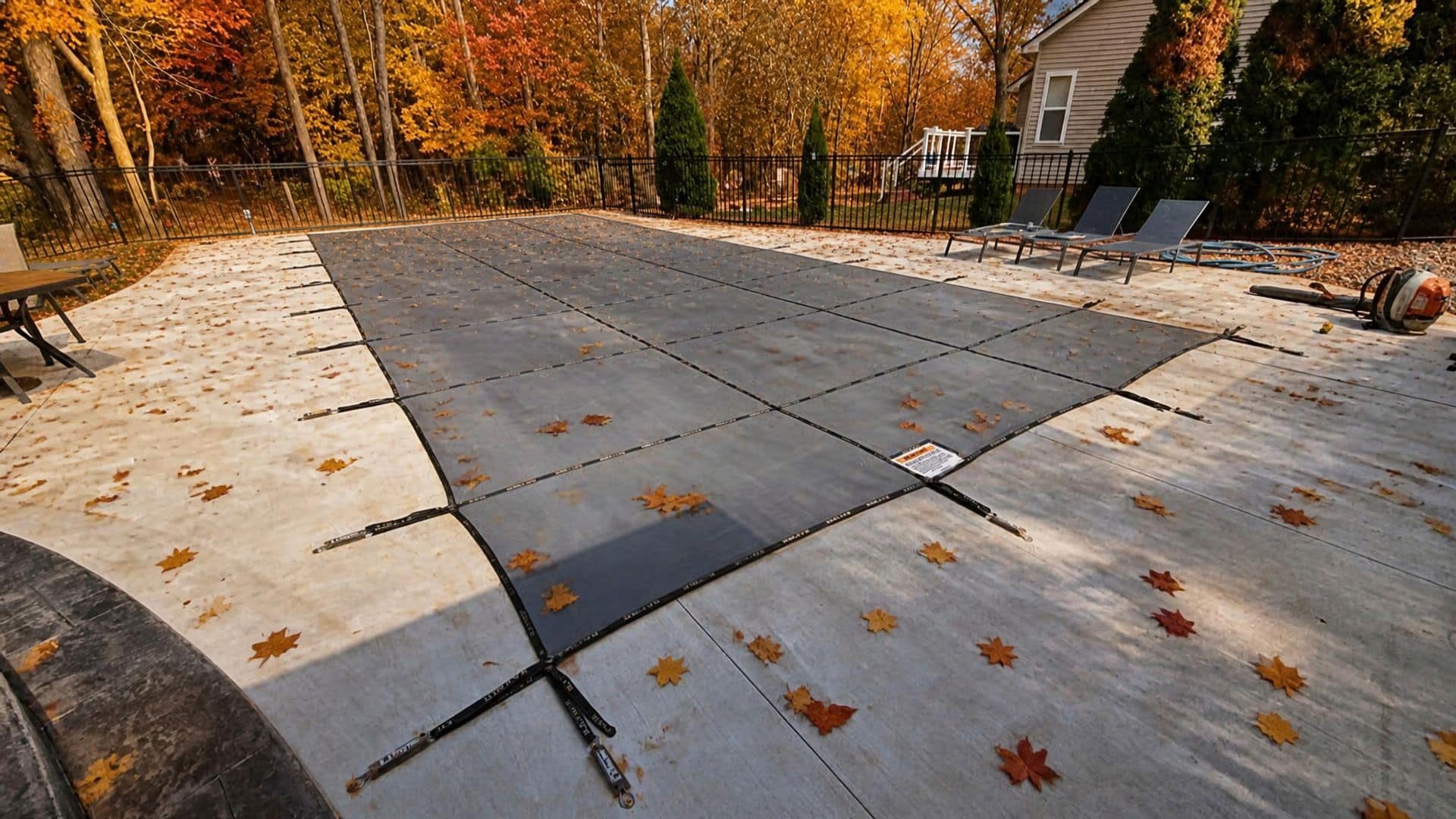
To maintain a fiberglass pool through the off season, clean the pool, balance the water, lower the water level slightly, winterize the equipment and plumbing, and cover it with a properly fitted winter cover. Do not drain a fiberglass pool. Keeping it filled helps protect the shell from the pressure of groundwater, and a little care now makes opening day next spring a whole lot easier.
Here’s a closer look at each step so you know what to expect once the weather turns cold.
Why the Off Season Matters
Fiberglass pools are known for being low maintenance, and that’s one of the biggest reasons homeowners choose them. The smooth, nonporous surface makes it harder for algae to cling, so there’s less scrubbing and fewer chemicals involved compared to other pool types. But low maintenance doesn’t mean no maintenance, especially in Michigan, where freezing temperatures can damage pool plumbing and equipment if they’re not prepared properly.
A few hours of work in the fall can save you from cracked pipes, a green pool in spring, and expensive repairs.
Never Drain a Fiberglass Pool
This is the most important rule, and it surprises a lot of new pool owners. Draining a fiberglass pool might sound like a logical way to protect it from freezing, but it can actually cause serious damage. When the pool is empty, groundwater pressure pushing against the outside of the shell can cause it to shift, buckle, or crack. Keeping the pool filled gives the shell the support it needs.
Instead of draining, you’ll lower the water level just a little, which we’ll cover below.
Step 1: Give the Pool a Thorough Cleaning
Before you close the pool for the season, give it a good cleaning. Skim leaves and debris off the surface, brush the walls and floor, and vacuum the bottom. Organic material left in the pool over winter breaks down and feeds algae, which can leave you with a stained, cloudy mess in the spring.
Don’t forget to empty the skimmer and pump baskets and clean or replace the filter as needed.
Step 2: Balance the Water Chemistry
Balanced water is your pool’s best defense over the winter. Testing and adjusting your chemistry before you close helps protect the surface and equipment, and it keeps algae and bacteria from taking hold while the pool sits unused.
A common target range is a pH between 7.2 and 7.6 and total alkalinity between 80 and 120 parts per million, though your pool manufacturer may have specific recommendations. Many pool owners also add a winterizing shock treatment and algaecide at closing. A local pool supply store or a pool professional can test your water and recommend the right products for your pool.
Step 3: Lower the Water Level a Little
Rather than draining, you’ll want to lower the water level slightly, usually to a few inches below the skimmer or return fittings, depending on your pool manufacturer’s instructions. This keeps water from sitting in the lines and fittings where it could freeze, while still leaving the pool full enough to support the shell.
Check your owner’s manual or ask your installer for the exact level recommended for your pool.
Step 4: Winterize the Plumbing and Equipment
This step is critical in a state with real winters. Any water left in your pool’s plumbing lines or equipment can freeze, expand, and crack pipes, pumps, filters, and heaters. Winterizing generally involves blowing out the water lines with an air compressor, plugging the lines so water can’t get back in, and draining the pump, filter, heater, and any other equipment.
If you’re not comfortable doing this yourself, it’s worth hiring a professional. A cracked line discovered in spring can turn into a much bigger repair than the cost of proper winterization.
Step 5: Cover the Pool
A well fitted winter cover keeps leaves, debris, and sunlight out of the pool while it’s closed. Sunlight encourages algae growth, and debris that gets into the water can cause stains. A safety cover adds another benefit by keeping kids and pets out of the pool when no one is supervising.
Make sure the cover fits snugly and is anchored securely so wind can’t lift it or let debris slip underneath.
Step 6: Keep an Eye on It All Winter
Even a closed pool needs an occasional check. After heavy storms or snowfall, look over the cover to make sure it’s still secure and hasn’t collected a large amount of water or debris. Standing water on a cover can get heavy and cause it to sag, so remove it with a cover pump when needed. Brush off leaves and debris when you can, and keep an eye on the water level under the cover in case heavy rain or snowmelt has changed it.
Opening the Pool in Spring
When warmer weather returns, the work you did in the fall pays off. Remove the cover carefully so debris doesn’t fall into the pool, clean off the cover and store it properly, then reconnect your equipment and restore the water level. Test and balance the water, shock the pool, and run the filter until the water is clear. Because you closed the pool correctly, you shouldn’t be starting from scratch.
Should You Do It Yourself or Hire a Pro?
Many homeowners handle the cleaning and chemistry themselves, and that’s perfectly reasonable. The plumbing winterization and cover installation are where a lot of people choose to bring in help, since mistakes can lead to costly damage. If you’re unsure about any step, asking a pool professional is a lot cheaper than repairing freeze damage later.
Thinking About Adding a Pool?
If you’re considering a fiberglass pool and wondering what ownership really looks like, off season care is a big part of the conversation, and it’s much simpler than many people expect. Fiberglass is a smart choice for Michigan homeowners who want a durable pool without a lot of upkeep.
How Horizon Landscape Inc Can Help
Horizon Landscape Inc has been creating beautiful outdoor spaces throughout Livingston and Oakland counties since 1994. We specialize in landscaping, hardscaping, and inground fiberglass pool installation, and we’ll work with you to design a backyard where the pool, patio, and landscaping all fit together.
If you’re thinking about adding a fiberglass pool, starting the conversation in the fall gives us plenty of time to plan your design and talk through every detail before building season. Give us a call at (810) 632-9292 or request a free quote on our website, and we’ll walk you through what to expect, including how to care for your pool through every season.
Frequently Asked Questions
Can you drain a fiberglass pool for the winter? We don’t recommend it. Groundwater pressure against the outside of an empty shell can cause it to shift, buckle, or crack, so a fiberglass pool should stay filled through the off season.
How much should the water level be lowered when closing a fiberglass pool? Most pools are lowered only a few inches, usually just below the skimmer or return fittings. The exact level depends on your pool manufacturer’s instructions, so we recommend checking your owner’s manual or asking your installer.
Do fiberglass pools need to be winterized in Michigan? Yes, winterizing is important in Michigan. Water left in the plumbing lines and equipment can freeze and crack pipes, pumps, filters, and heaters, so the lines should be blown out and the equipment drained before freezing temperatures arrive.
What water chemistry should a fiberglass pool have before closing? A common target is a pH between 7.2 and 7.6 and total alkalinity between 80 and 120 parts per million. Many owners also add a winterizing shock and algaecide, and a pool supply store or pool professional can test your water and recommend the right products.
Do fiberglass pools need a cover during the off season? Yes, a properly fitted winter cover keeps debris and sunlight out of the water, which helps prevent algae and stains. A safety cover also keeps kids and pets out of the pool while it’s closed.
Horizon Landscape Inc. proudly serves Hartland, MI, and the surrounding communities. Questions about our services? Contact our team today.