
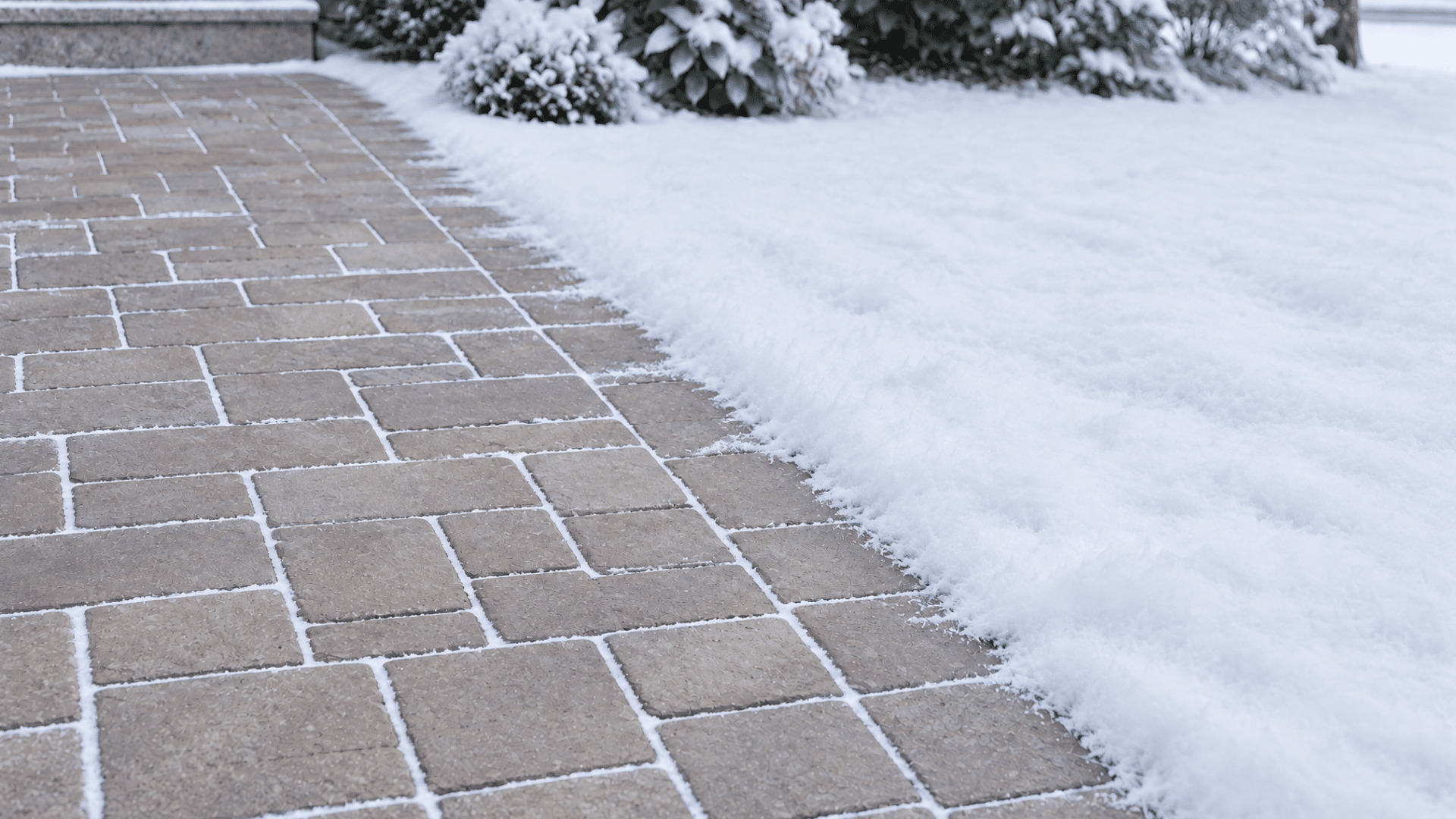
Use deicer sparingly, and only on ice that shoveling can’t clear. Stick with plain rock salt (sodium chloride) instead of magnesium chloride or CMA, scoop up loosened ice and extra salt quickly, and plow or shovel at an angle to your paver joints. Then sweep and top up the joint sand in spring. That’s the short version, and the rest of this guide walks through each step so your patio, walkway, and walls come out of winter looking the way they went in.
We’re Horizon Landscape Inc, a family owned landscaping and hardscaping company in Hartland. We’ve been building in Livingston and Oakland counties since 1994, so we’ve seen what a few Michigan winters can do to a hardscape that gets treated like a parking lot. The good news is that quality pavers and walls are built to handle this climate. A few smart habits just help them last longer.
Why Does Winter Hit Hardscapes So Hard in Michigan?
Michigan winters swing back and forth across freezing again and again. Water works its way into joints and surface pores, freezes, expands, and then thaws. Add deicing salt to that mix and the water carries it deeper into the surface. The Concrete Masonry & Hardscapes Association (CMHA) notes that deicers mixed with ice and snow can increase damage to concrete, and that pavers made with dense, low absorption materials tend to resist it better. That’s one reason we install Unilock pavers and walls, which are made for this kind of climate. Even so, how you treat them in winter still matters.
Step 1: Fix Small Problems Before the Snow Flies
Late fall is the best time to look things over. Walk your patio and walkways and check for:
- Pavers that have lifted or sunk. CMHA recommends repairing units with lippage greater than 1/8 inch before winter, since uneven edges catch shovel blades and plows.
- Joint sand that has washed out. CMHA says to top up joint sand once it drops more than 1/2 inch below the chamfer (the small beveled edge of the paver). Use dry masonry sand for topping up. CMHA doesn’t recommend polymeric sand for topping up joints.
- Leaves and debris sitting on the surface. A leaf blower works well here, but go easy so you don’t blow the joint sand out too.
Step 2: Shovel First, Salt Second
Deicer should be the backup plan, not the plan. Shovel or plow the snow first, then use salt only on the ice that’s left. Here’s what we tell our customers:
- Use rock salt (sodium chloride). CMHA calls it the least damaging deicer for concrete and says to use it whenever possible.
- Skip magnesium chloride and CMA. CMHA says these aren’t recommended because they can chemically degrade all types of concrete. Check the bag, because many “pet safe” and “eco” blends contain them.
- Use less than you think you need. CMHA’s guidance is to follow the recommended dosage and not over apply.
- Try sand for traction. CMHA suggests putting down sand first for traction, then adding deicer only as needed. One exception: sand shouldn’t go on permeable pavers.
Step 3: Clear Loosened Ice and Extra Salt Fast
Once salt has done its job and the ice loosens up, scoop it away. CMHA says loosened snow, ice, and excess salts should be promptly removed so the salt concentration doesn’t build up, and that you shouldn’t pile it up on the pavers. A good place to stack it is on the lawn side, away from the patio. Just keep in mind that salty snow piles can stress plants too, so don’t pile it on your favorite shrubs. CMHA also advises protecting vegetation and metal from deicers, since most can harm plants and corrode metal railings and furniture.
Step 4: Plow and Shovel the Right Way
How you move snow matters as much as what you put down. CMHA’s experience is that snow removal is easier when you shovel and plow diagonally to the joints, which helps keep blades from catching paver edges. If you have someone plowing your driveway, ask them to keep the blade slightly above the pavers. A blade scraping right on the surface is a quick way to chip edges and scuff the finish.
What About Retaining Walls?
Retaining walls take a different kind of beating. Pavers deal with salt on the surface. Walls deal with water behind and around them, plus whatever gets thrown their way during snow removal. We build with Redi-Rock, Unilock, and natural boulder, and here’s what we’d keep an eye on:
- Keep snow and salt piles off the wall tops and faces. Don’t shovel salty slush against a wall and leave it there all winter.
- Keep drainage clear. Check that downspouts and drain outlets near your walls aren’t blocked with leaves or ice. Water that has nowhere to go is what freezes and pushes.
- Watch for early warning signs in spring. Look for bulging, leaning, new gaps, or water seeping through at odd spots.
We’ve also written an article that explains more about what to do when drainage goes wrong.
Step 5: Do a Spring Cleanup
When the snow is gone, don’t skip this one. CMHA says spring sweeping should clear out leftover deicing chemicals and winter sand, and it recommends removing excess sand from the surface. Here’s the quick checklist:
- Sweep the whole surface, including the joints along walls and steps.
- Rinse with a garden hose. If you use a power washer, keep the pressure reasonable and watch the joint sand.
- Top up any low joints with dry masonry sand.
- Check for stains, rust marks from metal furniture, or white haze (efflorescence).
- Think about sealing. CMHA says to clean pavers before sealing and to get any efflorescence under control first. A sealer can also help reduce water getting into the joints, but it isn’t required, so ask us if you’re not sure it makes sense for your patio.
Frequently Asked Questions
Is rock salt bad for pavers?
Used lightly, no. CMHA says rock salt (sodium chloride) is the least damaging deicer for concrete materials. The trouble starts when too much is used or when it sits on the surface all winter.
Can I use calcium chloride on my patio?
CMHA says calcium chloride can be considered in limited amounts when you need a faster acting deicer. Magnesium chloride and CMA are the ones to avoid. If you’re unsure what’s in your product, ask us before you spread it.
Should I shovel or use salt first?
Shovel first. Salt works best on thin ice that’s left after the snow is gone, and you’ll use a lot less of it.
Do I need to seal my pavers before winter?
Not necessarily. Sealing isn’t required for every project. If you want one, CMHA says to clean first and sort out any efflorescence before sealing. We’re happy to look at your patio and tell you honestly whether it makes sense.
How do I know if my retaining wall is in trouble?
Look for leaning, bulging, widening gaps, or water coming through the face after a thaw. If you see any of those, call us and we’ll take a look.
Does Horizon Landscape Inc offer free consultations?
Yes. We offer a free consultation and no obligation quotes for hardscape projects, and we serve Livingston and Oakland counties and beyond.
Want Help Protecting What You’ve Got?
If your patio, walkway, or retaining wall is showing wear, or you’d like us to check it over before the next freeze, contact us or call (810) 632-9292. We’re open Monday through Saturday, 8am to 6pm. You can also see more of our work on our hardscaping page.
Horizon Landscape Inc. proudly serves the Southeast Michigan area. Questions about our company or about any of our services? Contact our team today using the form on our website.